Home » Resources » Healing After a Disaster: Short and Long-Term Recovery
Healing After a Disaster: Short- and Long-Term Recovery
Behavioral-health guidance to help individuals, families, helpers, and the wider community understand recovery, manage ongoing stress, and rebuild over time.
Emergency Help
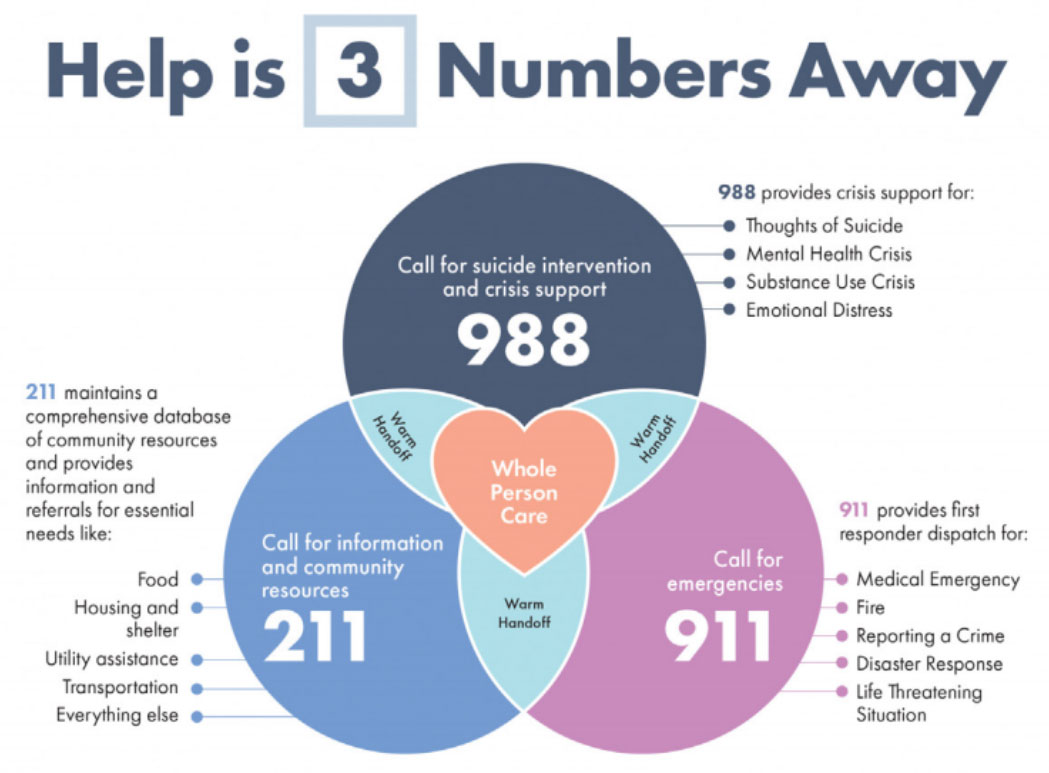
When to call 911, 988, or 211
Call
911
Immediate Danger / Emergencies
A medical emergency
Someone attempting to harm themselves or others
Fire, crime, or unsafe situations
You feel unsafe right now
Call or Text
988
Suicide Intervention and (Mental Health) Crisis Support
You feel very sad, scared, overwhelmed, or out of control
You are having thoughts of self-harm
You need someone to talk to right away
You are worried about someone else’s safety
Call
211
Information & Community Resources
Food, housing, or utility help
Finding local services
Support for people with disabilities or access and functional needs
Non-emergency community resources
Recovery Over Time
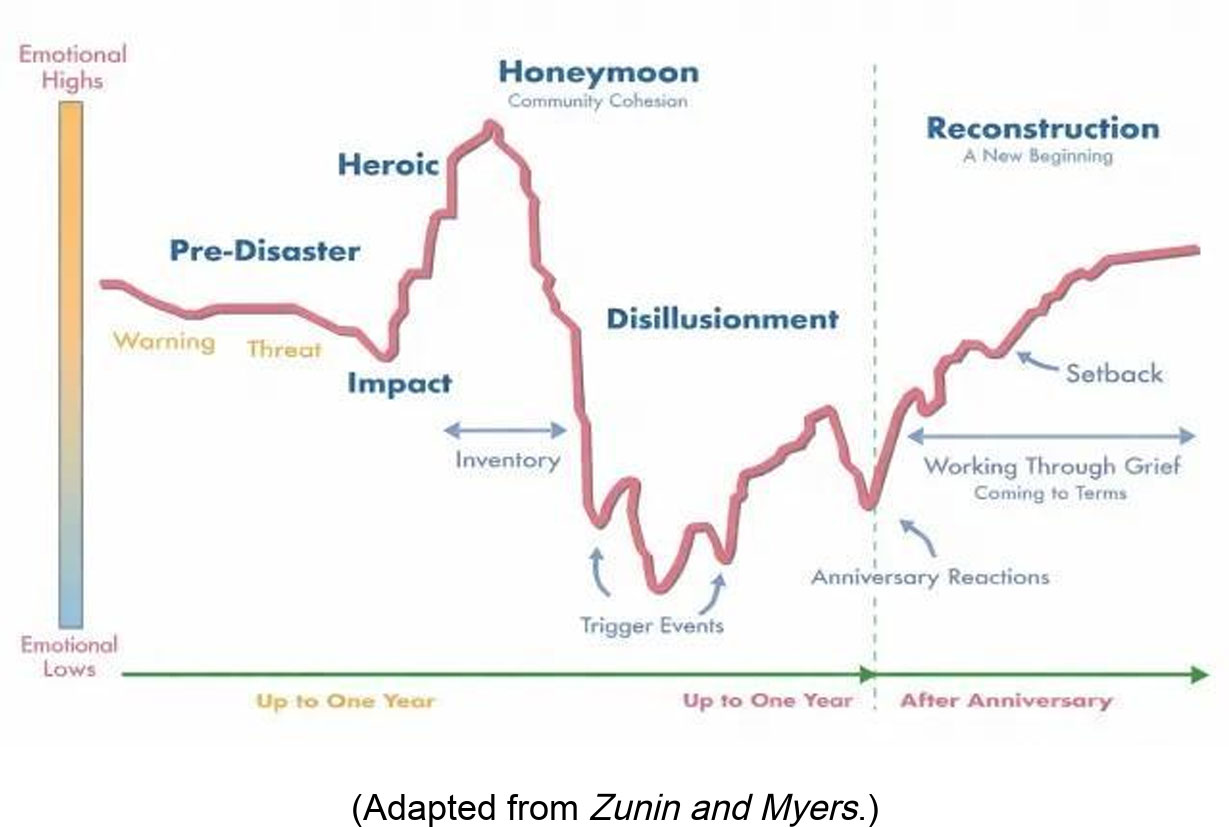
How People and Communities Heal Over Time.
Most communities move through these stages:
Impact: Shock, confusion.
Heroic: People helping each other with lots of energy.
Reconstruction/Rebuilding: Slowly finding new routines and hope.
It is normal for stress to rise again months later.
Individuals & Families
What Individuals & Families May Feel Over Time
Different reactions may appear at different points in recovery. The guidance below helps visitors recognize common patterns and know what can be helpful during each phase.