Need help now?

Call or text 988 for crisis support

Building Resiliency and Staying Strong Before and During a Disaster

Practical behavioral-health guidance to help individuals, families, caregivers, businesses, and communities prepare, cope, and stay connected during difficult events.

Emergency Help

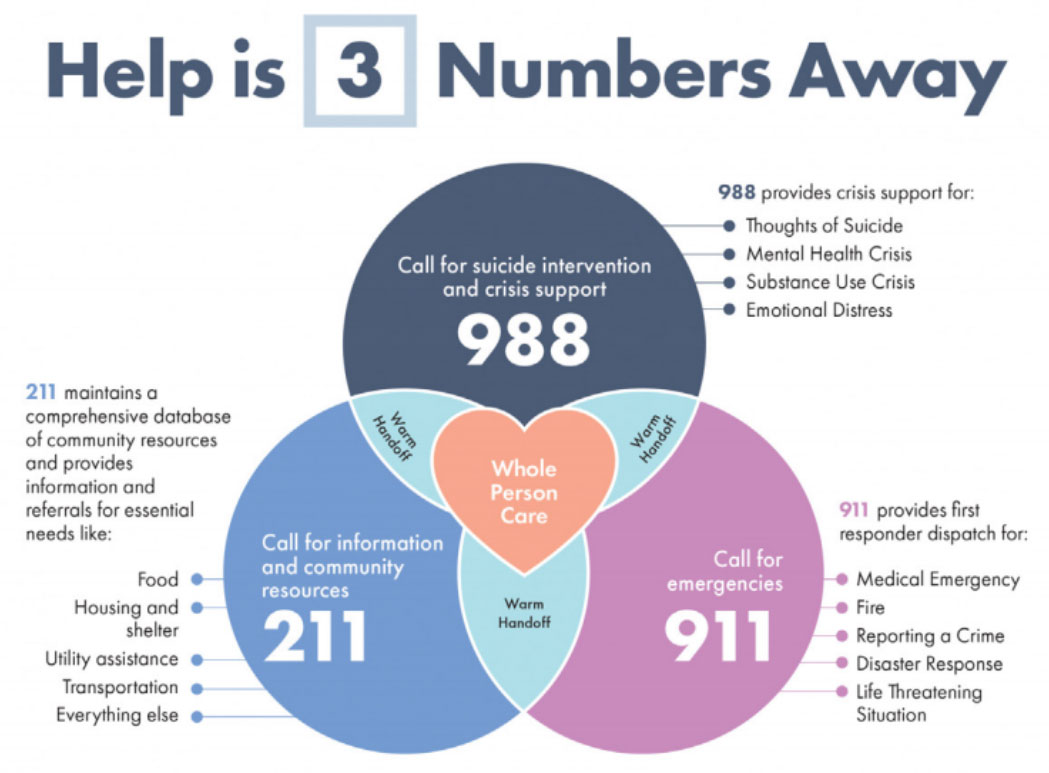
When to call 911, 988, or 211

Call

911

Immediate Danger / Emergencies

  • A medical emergency
  • Someone attempting to harm themselves or others
  • Fire, crime, or unsafe situations
  • You feel unsafe right now

Call or Text

988

Suicide Intervention and (Mental Health) Crisis Support
  • You feel very sad, scared, overwhelmed, or out of control
  • You are having thoughts of self-harm
  • You need someone to talk to right away
  • You are worried about someone else’s safety

Call

211

Information & Community Resources

  • Food, housing, or utility help
  • Finding local services
  • Support for people with disabilities or access and functional needs
  • Non-emergency community resources
Our Resources

How to stay strong before a disaster.

Preparation looks different depending on who you are supporting.

For Everyone

  • Keep a short list of people you trust and can call.
  • Practice calming skills like slow breathing, stretching, prayer, or quiet time.
  • Try to sleep, eat, and move your body every day.
  • Follow trusted news sources and avoid listening to, reading, or contributing to rumors.

For Families

  • Make a simple family plan: “Where do we meet?” “Who do we call?”
  • Keep important items together (medications, glasses, hearing aids, comfort items).
  • Talk with children in simple, honest words: “A disaster can be scary, but adults will work hard to keep you safe.”

For Caregivers

(For people who support children, older adults, or people with access and functional needs)
  • Keep a list of important information, such as medical needs, allergies, or communication tools.
  • Pack extra supplies your loved one may need, like medications, mobility aids, chargers, or sensory items.
  • Practice simple steps together: where to go, who to call, and what to bring.
  • Check in often and offer reassurance: “You’re safe. I’m here with you.”
  • Plan for backup support in case you need help caring for your loved one.

For Businesses & Larger Community Groups

  • Create and share an emergency plan that everyone can understand. (See resource on creating Continuity of Operations Plans (COOP Plans).)
  • Give basic training on disaster steps and behavioral health awareness.
  • Communicate clearly before, during, and after a disaster.
  • Communicate clearly before, during, and after a disaster.
  • Share information about local behavioral health and crisis resources.
During a Disaster

What You Might Feel During a Disaster

Behavioral health reactions can affect your body, thoughts, and emotions. These reactions often improve with time and support.

Fast Heartbeat

Shaking or sweating

Trouble thinking clearly

Feeling angry, sad, or numb

Wanting to be alone

Feeling jumpy or scared

Quick Self-Check

How are you doing right now?

Ask yourself a few simple questions. Changes in daily functioning, substance use, or hopelessness can be signs that you need more support.

Am I eating and sleeping at least a little?

Can I do simple tasks like getting dressed?

Am I using alcohol or drugs more than usual?

Do I feel hopeless or like giving up?

If you answer “yes” to either of the last two questions, reach out to a trusted person or helper.

Special Groups

What to watch for and how to help.

Children and Teens

Watch For
Clinginess, nightmares, tantrums, school trouble, and risky behavior.

Help By
Keeping routines, giving simple information, and letting them draw or talk.

Older Adults

Watch For
Confusion, sadness, loneliness, and trouble with daily tasks.

Help By
Checking in often, speaking clearly, and helping with medications and appointments.

People Living With Mental Health Conditions

Watch For
Worsening symptoms, stopping medications, or confusion.

Help By
Keeping medication lists handy and helping them keep appointments.

People Living With PTSD or Trauma Histories

Watch For
Flashbacks, nightmares, and a strong startle response.

Help By
Reducing loud noises or triggers and offering grounding activities.

People Living With a Substance Use Disorder

Watch For
Increased use, relapse, or risky behavior.

Help By
Encouraging connection to recovery supports and avoiding shame or blame.

People With Disabilities or Access and Functional Needs

Watch For
Barriers to communication, mobility, medication access, or safety.

Help By
Asking what support they prefer and ensuring access to devices, aids, or caregivers.

People With Limited Social Support

Watch For
Isolation and unmet basic needs.

Help By
Connecting them with neighbors, community groups, or faith communities.

Additional Resources

Helpful documents and links.